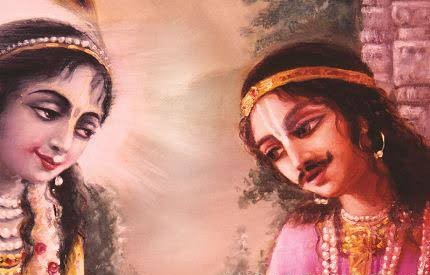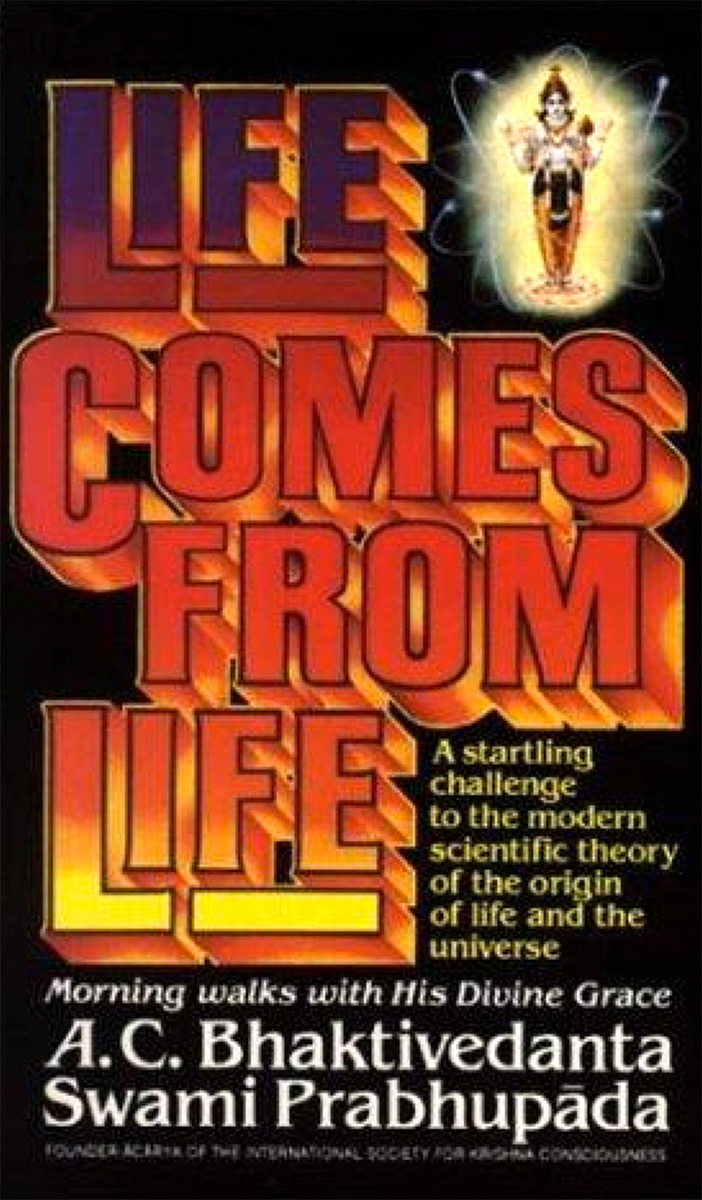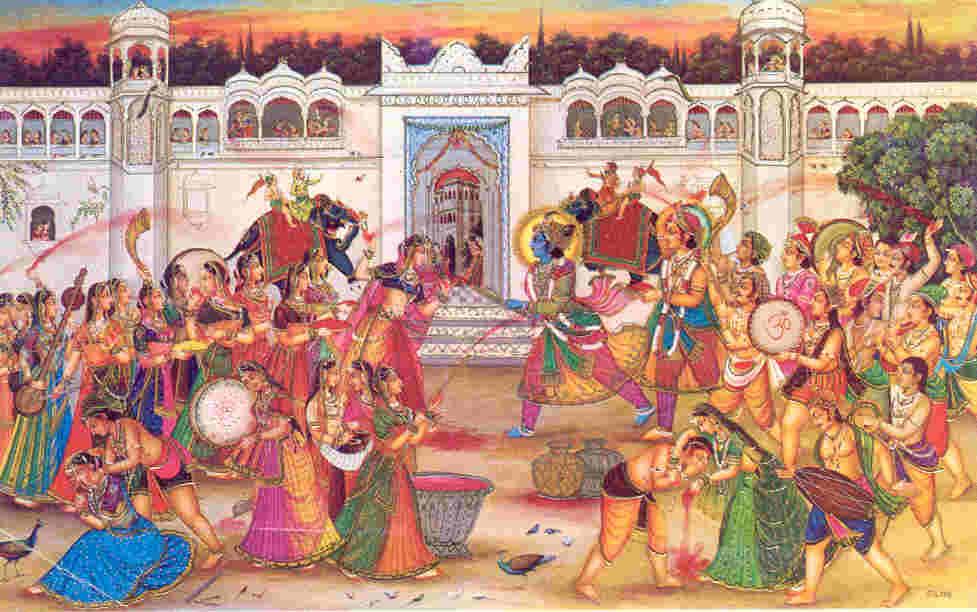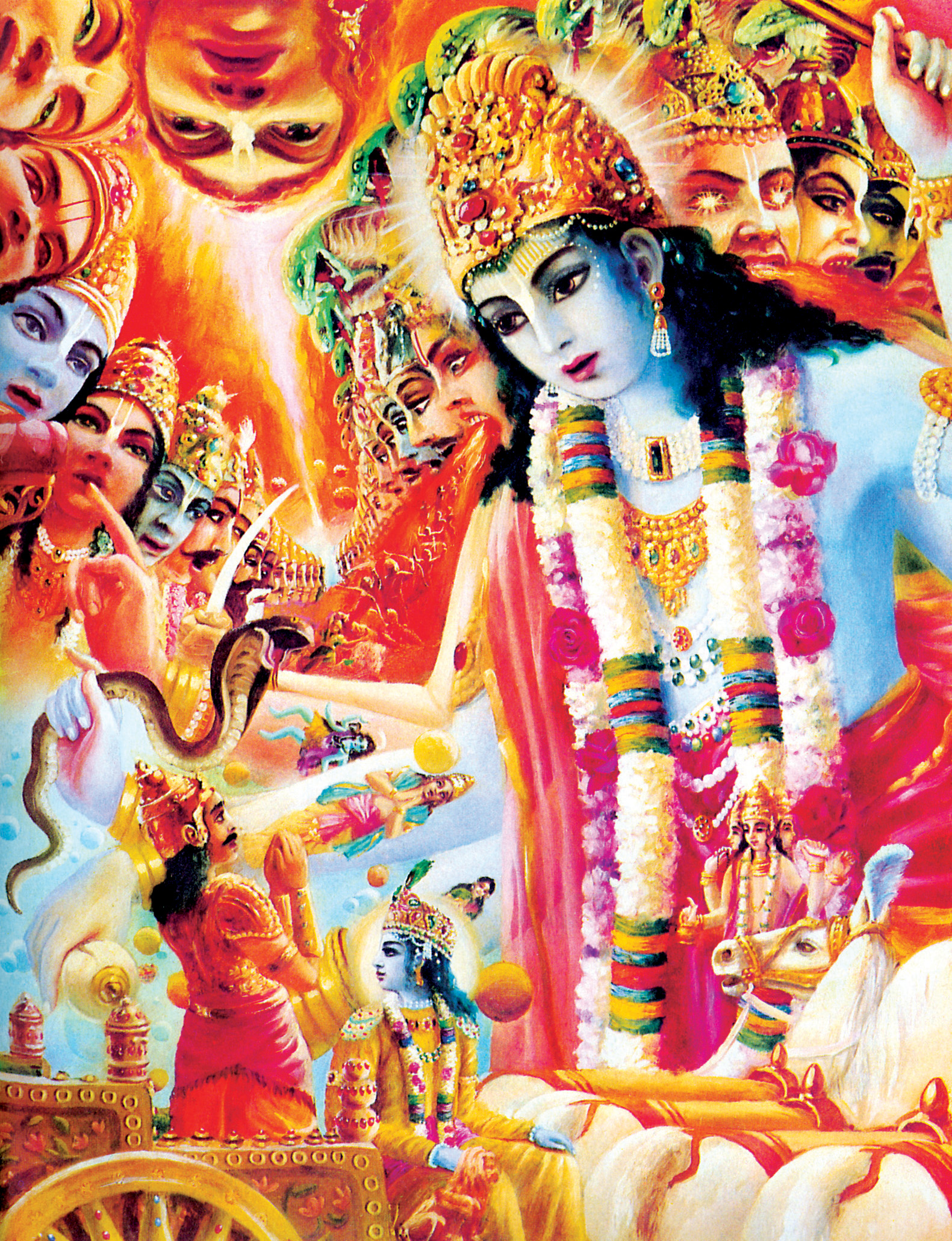
The Pañca-tattva Mantra

Bhagavad-Gita-Original-Art-Pancha-Tattva

PANCA-TATTVA MAHA-MANTRA

(jaya) sri-krsna-caitanya prabhu nityananda

sri-advaita gadadhara srivasadi-gaura-bhakta-vrnda

“I offer my respectful obeisances unto Sri Caitanya Mahaprabhu, Lord Nityananda, Sri Advaita,
Gadadhara Pandit, Srivas Thakur, and all the devotees of Lord Caitanya.”

“

…There are ten offenses in the chanting of the Hare Kṛṣṇa mahā-mantra, but these are not considered in the chanting of the Pañca-tattva mantra, namely, śrī-kṛṣṇa-caitanya prabhu-nityānanda śrī-advaita gadādhara śrīvāsādi-gaura-bhakta-vṛnda. Śrī Caitanya Mahāprabhu is known as mahā-vadānyāvatāra, the most magnanimous incarnation, for He does not consider the offenses of the fallen souls. Thus to derive the full benefit of the chanting of the mahā-mantra (Hare Kṛṣṇa, Hare Kṛṣṇa, Kṛṣṇa Kṛṣṇa, Hare Hare Hare Rāma, Hare Rāma, Rāma Rāma, Hare Hare), we must first take shelter of Śrī Caitanya Mahāprabhu, learn the Pañca-tattva mahā-mantra, and then chant the Hare Kṛṣṇa mahā-mantra. That will be very effective.

Continue reading →

The Songs of the Queens at Dvaraka

I found this in Srila Prabhupada’s purport to Sri Caitanya-caritmrta Antya-lila 19.108. The real beauty of Srila Prabhupada’s books lies in his purports. Always so much nectar.

The songs of the queens at Dvārakā, which are mentioned at the end of the Tenth Canto of Śrīmad-Bhāgavatam, have a very special meaning. They are not understood even by the most learned scholars. (Cc. Antya 19.108)

If one becomes a servant of the servants of Śrī Caitanya Mahāprabhu and Lord Nityānanda Prabhu and is favored by Them, he can believe in all these discourses. (Cc. Antya 19.109)

Just try to hear these topics with faith, for there is great pleasure even in hearing them. That hearing will destroy all miseries pertaining to the body, mind and other living entities, and the unhappiness of false arguments as well. (Cc. Antya 19.110)

The Songs of the Queens at Dvaraka

Purport

These songs of Śrīmad-Bhāgavatam are verses 15-24 of the Ninetieth Chapter of the Tenth Canto.

kurari vilapasi tvaṁ vīta-nidrā na śeṣe
svapiti jagati rātryām īśvaro gupta-bodhaḥ
vayam iva sakhi kaccid gāḍha-nirbhinna-cetā
nalina-nayana-hāsodāra-līlekṣitena

All the queens incessantly thought of Kṛṣṇa. After their pastimes in the water, the queens said, “Our dear friend the osprey, Kṛṣṇa is now asleep, but we stay awake at night because of Him. You laugh at us when you see us awake at night, but why are you not sleeping? You seem absorbed in thoughts of Kṛṣṇa. Have you also been pierced by Kṛṣṇa’s smile? His smile is very sweet. One who is pierced by such an arrow is very fortunate.”

Continue reading →

The Passing of Haridas Thakur

I saw this on Facebook posted by Abhinanda Prabhu, but originally compiled by Drutakarma Prabhu for “Back to Godhead Magizine”

The Passing of Haridas Thakur

By Drutakarma Das

There he passed almost the whole day and night simply chanting the Hare Kṛṣṇa mahā-mantra. He softly repeated the sacred syllables hour after hour, keeping count on his prayer beads until, long after sunset, the holy names had crossed his lips no less than three hundred thousand times.

Not far from Haridāsa Ṭhākura’s secluded hermitage lived Lord Caitanya and His followers, who loudly chanted the mahā-mantra, proclaiming the glories of Kṛṣṇa. People honored Lord Caitanya as an extraordinary devotee, and a select few knew that He was an incarnation of Kṛṣṇa, the Supreme Personality of Godhead, and that He had come to this world to spread the chanting of the maha-mantra.

Continue reading →

The Sannyasa Order

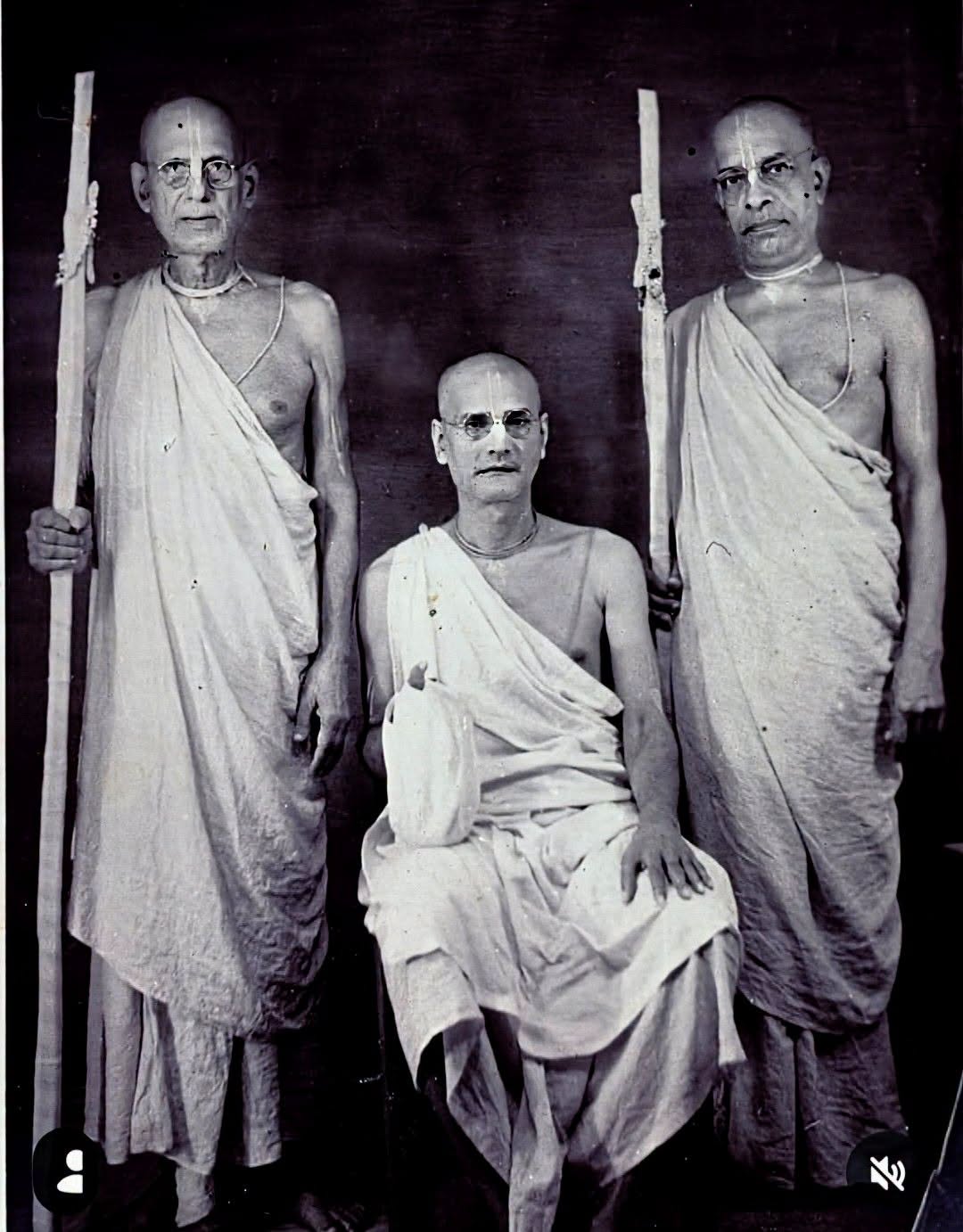
(Muni Maharaja, Bhakti Prajnana Kesava Maharaja, A.C. Bhaktivedanta Swami)

Today marks Srila Prabhupada’s acceptance of Sannyasa. Thanks to The late Padmapani Prabhu Prabhupada Connect for so nicely putting together this list list of quotes by Srila Prabhupada on Sannyasa, which we have re-posted here.

Srila Prabhupada’s Sannyasa Initiation

Srila Prabhupada accepted the order of sannyasa from Sri Srimad Bhaktiprajnana Kesava Maharaja on September 17, 1959 at the Kesavaji Math in Mathura. Included below are some relevant quotes from Srila Prabhupada’s lectures and letters.

“The Krishna consciousness movement is not that we are asking everyone to become a sannyasi like me, and give up everything. No. That is not our program. You act as a brahmaṇa, as a ksatriya or a vaisya or a sudra. It doesn’t matter. But you try to satisfy Krishna. That is the program.” (Srila Prabhupada Lecture, Bombay, December 30, 1972)

“So anyway, so I was officially initiated in 1933, just before three years of his passing away from this mortal world. So at the last moment also, just a fortnight before his passing away, he wrote me the same thing. I wrote him one letter and just he replied the same thing that ‘You should try to preach this gospel amongst the persons who are conversant in English language. That will be very nice for you.’ So I was dreaming sometimes that my Guru Maharaja is calling me and I am leaving my home and going behind him. I was dreaming like that, and I was thinking, ‘Oh, I have to give up my home? My Guru Maharaja wants me to give up my home life and take sannyasa?’ So I was thinking, ‘It is horrible. How can I leave my home?’ This is called maya. Of course, it’s a long story, but incidentally I am speaking to you because you are my dear children. So I was thinking that ‘How can I take sannyasa and leave my home, my children?’ So that was a horrible thought for me, I tell you. I was thinking seriously, ‘Oh, I will have to take this course. Guru Maharaja wants me.’ But actually I did not like to give up my home life. But Guru Maharaja made me obliged to give up my home life. So now, by his order, or by his plan, I gave up my home life, I gave up a few children, but Guru Maharaja is so kind that has given me so many nice children.” (Srila Prabhupada Lecture, Montreal, July 26, 1968)

Continue reading →

Light of the Bhagawata

A poetic study of the seasons and the soul

Light of the Bhāgavata

His Divine Grace A.C. Bhaktivedanta Swami Prabhupāda·1984

A meditation in fifty-two verses on the natural seasons of India and what they reveal about devotion — Prabhupāda’s translation and purport on Sanātana Gosvāmī’s Bṛhad-bhāgavatāmṛta excerpts, paired with traditional Chinese landscape paintings.

Preface

We offer our respectful obeisances unto the lotus feet of His Divine Grace A.C. Bhaktivedanta Swami Prabhupāda, Founder-Ācārya of the International Society for Krishna Consciousness, who has delivered the light of the Bhāgavata to the whole world. We are pleased to present for his pleasure this publication of his sublime work Light of the Bhāgavata.

Of all His Divine Grace’s writings, this work is perhaps the most unique. It was written in Vṛndāvana in 1961 in response to an invitation to attend a world conference, the Congress for Cultivating the Human Spirit, held in Japan. As most of the participants to the Conference were from the Orient, Śrīla Prabhupāda considered deeply how he could best present the timeless teachings of the Śrīmad-Bhāgavatam suitable to the Oriental people. The original Bhāgavatam was written over five thousand years ago as an extremely large book composed of eighteen thousand verses. Participants to the conference would not have the time to hear it all. He therefore chose one chapter from the original version for presentation.

Continue reading →

What is Mayavada Philosophy

My wife read me this the other day, from the purport to verse Madya-lila 7.17.145 in the Caitanya-caritmrta.

The youths who joined this movement were not very advanced as far as purity was concerned, nor were they very well educated in Vedic knowledge, but because they were not offenders, they could accept the importance of the Hare Kṛṣṇa movement.

…when we came to preach the Hare Krishna movement in the West. When we came to New York in 1965, we never expected that the Hare Kṛṣṇa mahā-mantra would be accepted in this country. Nonetheless, we invited people to our storefront to join in chanting the Hare Kṛṣṇa mantra, and the Lord’s holy name is so attractive that simply by coming to our storefront in New York, fortunate young people became Kṛṣṇa conscious. Although this mission was started with insignificant capital, it is now going nicely. The spreading of the Hare Kṛṣṇa mahā-mantra in the West has become successful because the young people were not offenders. The youths who joined this movement were not very advanced as far as purity was concerned, nor were they very well educated in Vedic knowledge, but because they were not offenders, they could accept the importance of the Hare Kṛṣṇa movement. We are now very happy to see that this movement is advancing more and more in the Western countries. We therefore conclude that the so-called mlecchas and yavanas of the Western countries are more purified than offensive Māyāvādīs or atheistic impersonalists. (from purport Madya-lila 7.17.145)

This sentence jumped out at me ‘ but because they were not offenders, they could accept the importance of the Hare Kṛṣṇa movement’, and I wanted to understand what was meant by offenders. And I realized that Srila Prabhupada was refering to the Mayavada or Mayavadi Philosphy.

Continue reading →

Radhastami

Today marks the Appearance of Srimati Radharani.  We honor it with a half day fast, discussion on the glories of Srimati Radharani, followed by a nice vegetarian feast.

The following are just a few of the many quotes from Srila Prabhupada which encourage us to approach Krishna through the mercy of Srimati Radharani, Krishna’s eternal consort. For those of us who feel that there is no hope of making spiritual progress in this lifetime, Srimati Radharani, Who is compassion personified, kindly comes to our rescue if we can humbly invoke Her divine blessings.

tapta-kancana-gaurangi radhe vrndavanesvari
vrsabhanu-sute devi pranamami hari-priye

“I offer my respects to Radharani whose bodily complexion is like molten gold and who is the Queen of Vrndavana. You are the daughter of King Vrsabhanu, and You are very dear to Lord Krishna.”  (Sri Radha Pranama)

“So this is our philosophy, to please Krishna through Radharani, and just today is the auspicious day of Radharani appearance. So we should offer puspanjali and pray to Radharani that ‘Radharani, kindly be merciful and tell about me to Your Krishna. To Your Krishna. Krishna is Yours.’ Krishna, Radha-Krishna. Krishna is not independent. Krishna is Radharani’s property. So you have to approach Krishna through Radharani. That is, today is the auspicious day. Worship Radharani very nicely and be happy.”  (Srila Prabhupada Lecture, September 5, 1973)

“The beauty of Srimati Radharani’s eyes forcibly devours the beauty of newly grown blue lotus flowers, and the beauty of Her face surpasses that of an entire forest of fully blossomed lotuses. Her bodily luster seems to place even gold into a painful situation. Thus the wonderful, unprecedented beauty of Srimati Radharani is awakening in Vrindavana.”  (Caitanya-caritamrita Antya 1.169)

“I emphatically say to you, O brothers, you will obtain your good fortune from the Supreme Lord Krishna only when Srimati Radharani becomes pleased with you.”(Prayer to the Lotus Feet of Krishna, September 13, 1965)

Continue reading →

Four Kinds of Men

This morning I woke up thinking about these verses from the Bhagavad-gita. I was thinking ‘why would someone not be attracted to the All Attractive Personality of Godhead Sri Krishna’. So I went to the Bhagavad-gita to re-read what Srila Prabhupada had said about surrendering to Krishna.

Those miscreants who are grossly foolish, lowest among mankind, whose knowledge is stolen by illusion, and who partake of the atheistic nature of demons, do not surrender unto Me. (Bg 7.15)

O best among the Bhāratas [Arjuna], four kinds of pious men render devotional service unto Me—the distressed, the desirer of wealth, the inquisitive, and he who is searching for knowledge of the Absolute. (Bg 7.16)

Śrī Yāmunācārya Albandru of South India said, “O my Lord! You are unknowable to persons involved with atheistic principles despite Your uncommon qualities, features, and activities and despite Your personality being confirmed by all the revealed scriptures in the quality of goodness, and despite Your being acknowledged by the famous authorities renowned for their depth of knowledge in the transcendental science and situated in the godly qualities.”

Therefore, (1) grossly foolish persons, (2) the lowest of mankind, (3) the deluded speculators, and (4) the professed atheists, as above mentioned, never surrender unto the lotus feet of the Personality of Godhead in spite of all scriptural and authoritative advice.

Continue reading →

Advent of Kali Yuga

Kali Yuga is the fourth and shortest Yuga in the cycle of four ages (Satya, Treta, Dvapara, and Kali), lasting 432,000 human years. Kali Yuga is said to last for 432,000 years, with approximately 5,000 years already passed. As stated in Bhagavad-gītā, the Lord descended to the earth for the protection of the faithful and annihilation of the impious, so after the Battle of Kurukṣetra and establishment of Mahārāja Yudhiṣṭhira, the mission of the Lord was complete. The Advent of Kali Yuga began after the departure of Lord Krishna.

Srimad Bhagavatam

Disappearance of Lord Krishna

by His Divine Grace A. C. Bhaktivedanta Swami Prabhupada

Canto 1, Chapter 14, Text 3

kālasya ca gatiṁ raudrāṁ
viparyastartu-dharmiṇaḥ
pāpīyasīṁ nṛṇāṁ vārtāṁ
krodha-lobhānṛtātmanām

kālasya — of eternal time; ca — also; gatim — direction; raudrām — fearful; viparyasta — reversed; ṛtu — seasonal; dharmiṇaḥ — regularities; pāpīyasīm — sinful; nṛṇām — of the human being; vārtām — means of livelihood; krodha — anger; lobha — greed; anṛta — falsehood; ātmanām — of the people.Translation

He saw that the direction of eternal time had changed, and this was very fearful. There were disruptions in the seasonal regularities. The people in general had become very greedy, angry and deceitful. And he saw that they were adopting foul means of livelihood.

Purport

When civilization is disconnected from the loving relation of the Supreme Personality of Godhead, symptoms like changes of seasonal regulations, foul means of livelihood, greed, anger and fraudulence become rampant. The change of seasonal regulations refers to one season’s atmosphere becoming manifest in another season — for example the rainy season’s being transferred to autumn, or the fructification of fruits and flowers from one season in another season. A godless man is invariably greedy, angry and fraudulent. Such a man can earn his livelihood by any means, black or white. During the reign of Mahārāja Yudhiṣṭhira, all the above symptoms were conspicuous by their absence. But Mahārāja Yudhiṣṭhira was astonished to experience even a slight change in the godly atmosphere of his kingdom, and at once he suspected the disappearance of the Lord. Foul means of livelihood implies deviation from one’s occupational duty. There are prescribed duties for everyone, such as the brāhmaṇa, kṣatriya, vaiśya and śūdra, but anyone who deviates from his prescribed duty and declares another’s duty to be his own is following a foul and improper duty. A man becomes too greedy for wealth and power when he has no higher objective in life and when he thinks that this earthly life of a few years is all in all. Ignorance is the cause for all these anomalies in human society, and to remove this ignorance, especially in this age of degradation, the powerful sun is there to distribute light in the shape of Śrīmad-Bhāgavatam.